AI Agents Are the New Middleware (And That's a Good Thing)
The integration problem never got solved. We just kept throwing more tools at it. Zapier, n8n, Make, Workato. Every one promised to connect your stack. Every one broke the moment something didn't fit a neat trigger/action template.
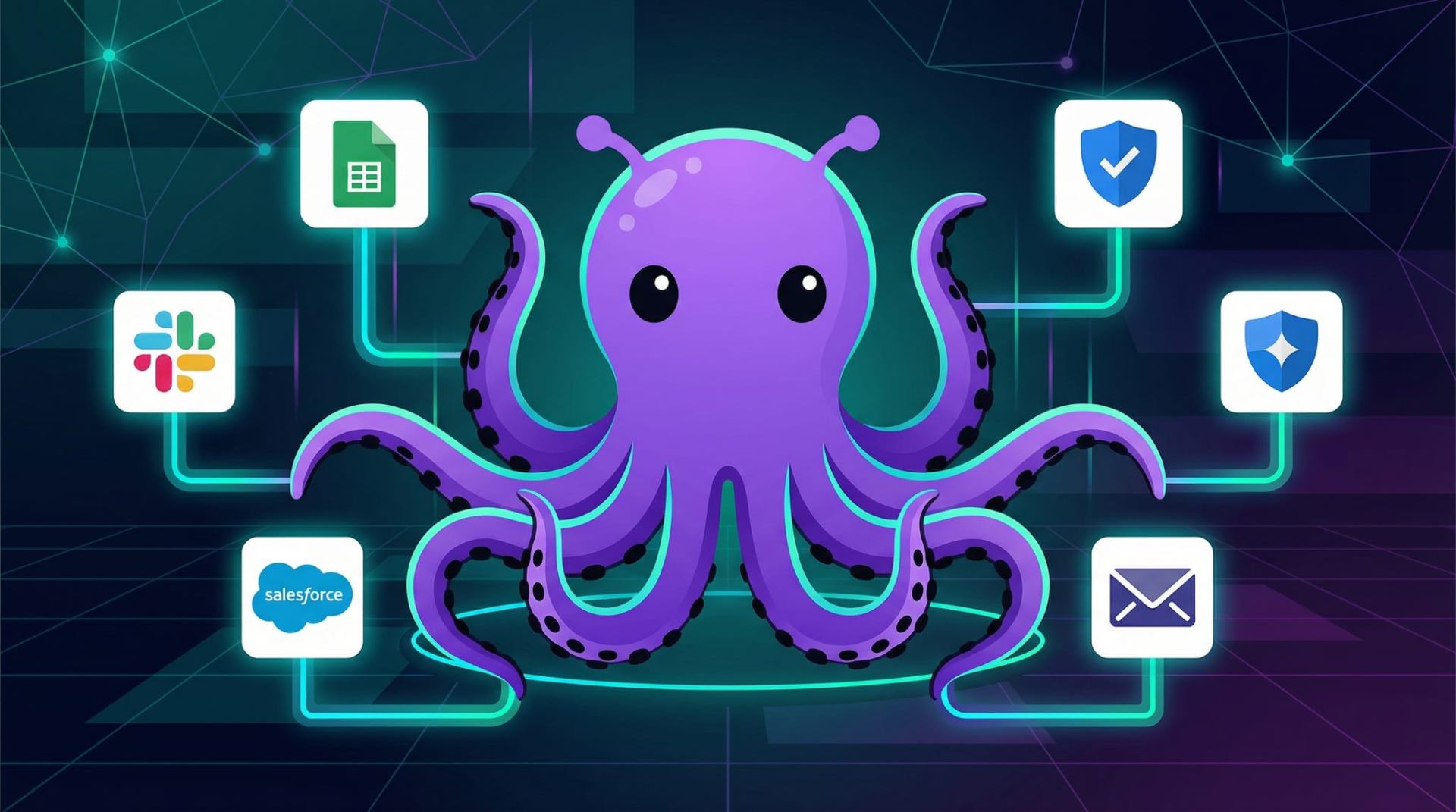
The Integration Tax
Most businesses run dozens of SaaS tools. The tools themselves aren't the product. The connections between them are.
Zapier and friends handle the simple connections fine. "New row in Google Sheet, create Jira ticket." Done. But the moment you need context, judgment, or edge case handling, it falls apart. A vendor sends an invoice in a format your parser hasn't seen. A support ticket requires pulling data from three systems and making a routing decision. You're back to alt-tabbing between apps, being the middleware yourself.
The root cause is structural. These automation tools need rigid schemas. Input must match an expected shape or the thing errors out. No ambiguity tolerance, no variation handling. Every API change, every new field means another hour of workflow editing. Companies hire entire roles just to maintain this duct tape. Smart, expensive engineers babysitting brittle automations.
The dirty secret: most automated workflows have a human in the middle anyway, fixing the ones that fail silently. That hidden labor is the real integration tax.
The Agent as Middleware
An AI agent doesn't need a predefined schema. It reads, interprets, and acts.
A new hire starts Monday. The agent picks up the signed offer letter from email and handles the rest:
- Extracts name, role, start date, and department from the letter
- Provisions accounts in Google Workspace and Slack
- Adds the onboarding checklist to Notion
- Notifies the hiring manager with a summary
The offer letter format varies by country, by recruiter, by legal template. The agent handles all of them because it reads the document the way a human would. No Zap. No regex. No brittle field mapping.
Or: an agent watches Slack for customer escalation signals. Not just keywords, but context. Frustrated tone, cancellation mentions, repeated complaints. It pulls the customer's history from Zendesk, checks account status in the CRM, drafts a contextual response, and routes it to the right person. Try building that in a workflow builder without losing your mind.
The difference: agents handle the messy middle that rigid automations can't. And when inputs change (new document format, new API field, different phrasing), the agent adapts instead of breaking. The maintenance burden drops because the integration layer can reason about what it's processing.
The New Stack
Old stack: SaaS tool → Zapier → SaaS tool. Rigid. Breaks on edge cases. Constant maintenance.
New stack: SaaS tool → Agent → SaaS tool. Flexible. Handles ambiguity. And critically, it logs its reasoning, so you can audit exactly why a decision was made. Every step, every judgment call, traceable. For sensitive actions, a human approves before the agent executes. Traditional automation tools never offered either of those things.
To be clear: agents don't replace Zapier for simple, high-volume, structured flows. "New email, send Slack notification" is a solved problem. Don't over-engineer it.
Agents replace automation tools for everything that requires judgment. And if you're honest about how your integrations actually work, that's most of the valuable work.
Middleware With a Brain
The integration layer was always the hardest part. Not the tools, but the glue between them. We spent years trying to make that glue smarter through better UIs and more connectors. The fundamental limitation was always the same: the glue couldn't think.
Now it can. That's not a marginal improvement. It's a different category entirely.
The integration problem didn't get solved by better workflow builders. It's getting solved by systems that can actually think about the work.
That's what we're building at OctoClaw. Stop maintaining brittle automations. Start building your first agent today.